Yarrila Place currently relies on a mix of physical signage, brochures, websites, and in-person assistance to communicate information about its spaces and programs.
Yarrila Place currently relies on a mix of physical signage, brochures, websites, and in-person assistance to communicate information about its spaces and programs.
difficulty navigating a multi-level building
missing events or community programs
lack of clarity around where activities are located
limited accessibility for users unfamiliar with the space
difficulty navigating a multi-level building
missing events or community programs
lack of clarity around where activities are located
limited accessibility for users unfamiliar with the space
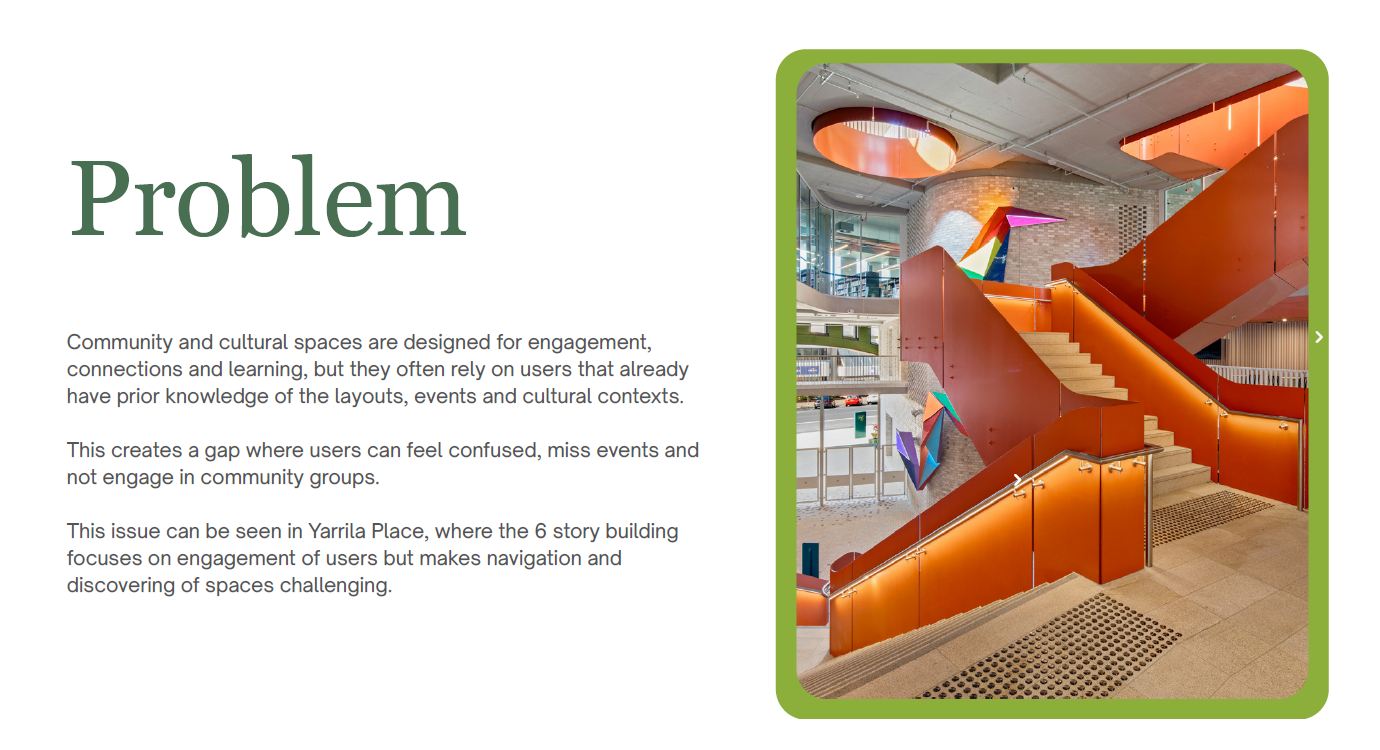
Problem
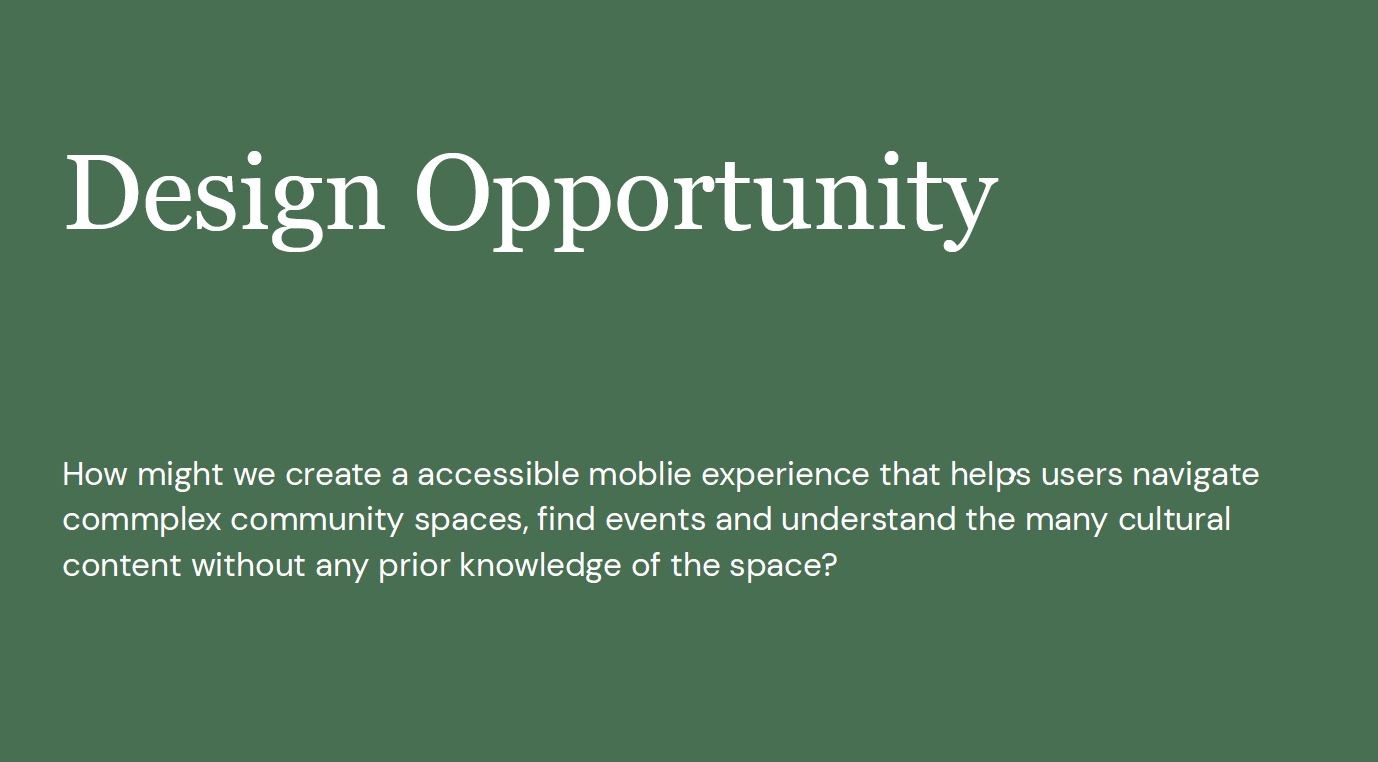
The design was guided by accessibility, clarity, and ease of use.
The design was guided by accessibility, clarity, and ease of use.
simplifying navigation with clear icon-led structure
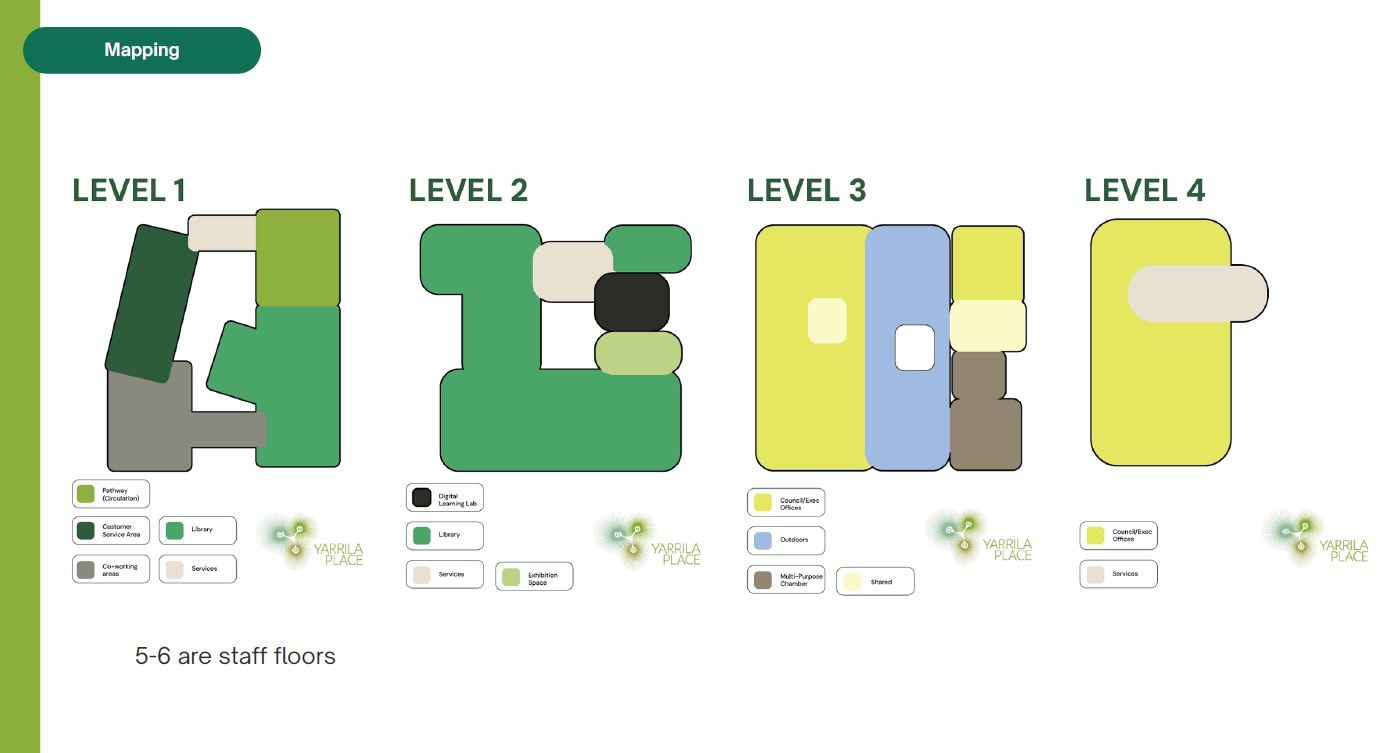
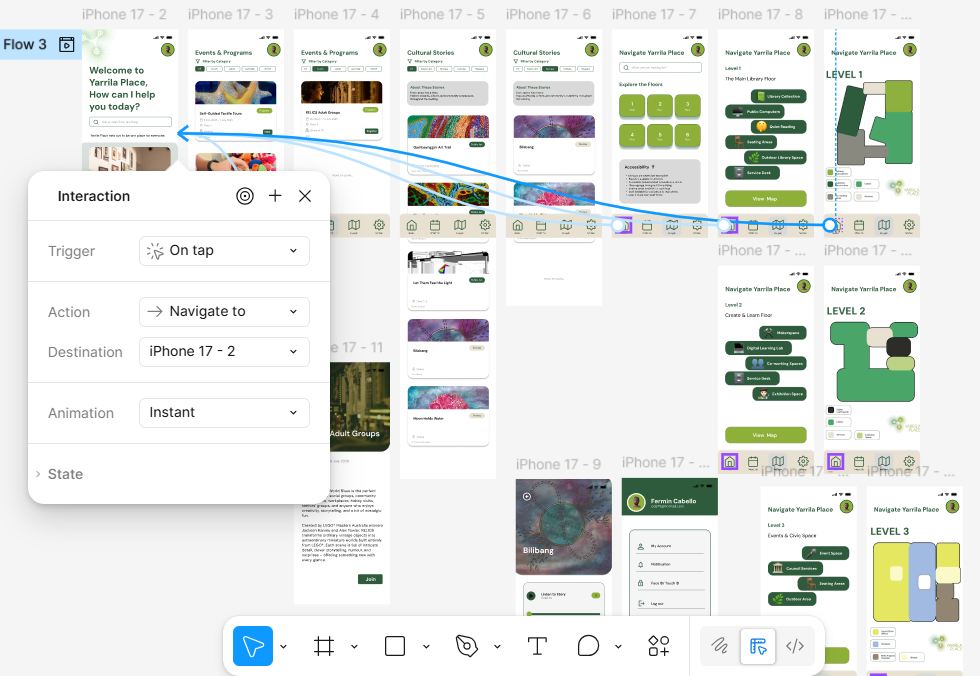
designing floor maps and wayfinding features for multi-level navigation
creating a strong visual hierarchy to prioritise key information
using large tap targets and readable typography for accessibility
breaking information into smaller, digestible sections
designing dedicated sections for events, navigation, and cultural content
reducing visual clutter to support cognitive accessibility
simplifying navigation with clear icon-led structure
designing floor maps and wayfinding features for multi-level navigation
creating a strong visual hierarchy to prioritise key information
using large tap targets and readable typography for accessibility
breaking information into smaller, digestible sections
designing dedicated sections for events, navigation, and cultural content
reducing visual clutter to support cognitive accessibility
Design Decisions
way finding app
way finding app
This project is an inclusive UI/UX mobile app designed for Yarrila Place, a multi-level community and cultural hub combining library services, exhibitions, workshops, events, and public spaces. The aim was to improve how users navigate and engage with the building by creating a simple, accessible digital experience that supports exploration, discovery, and participation.
This project is an inclusive UI/UX mobile app designed for Yarrila Place, a multi-level community and cultural hub combining library services, exhibitions, workshops, events, and public spaces. The aim was to improve how users navigate and engage with the building by creating a simple, accessible digital experience that supports exploration, discovery, and participation.
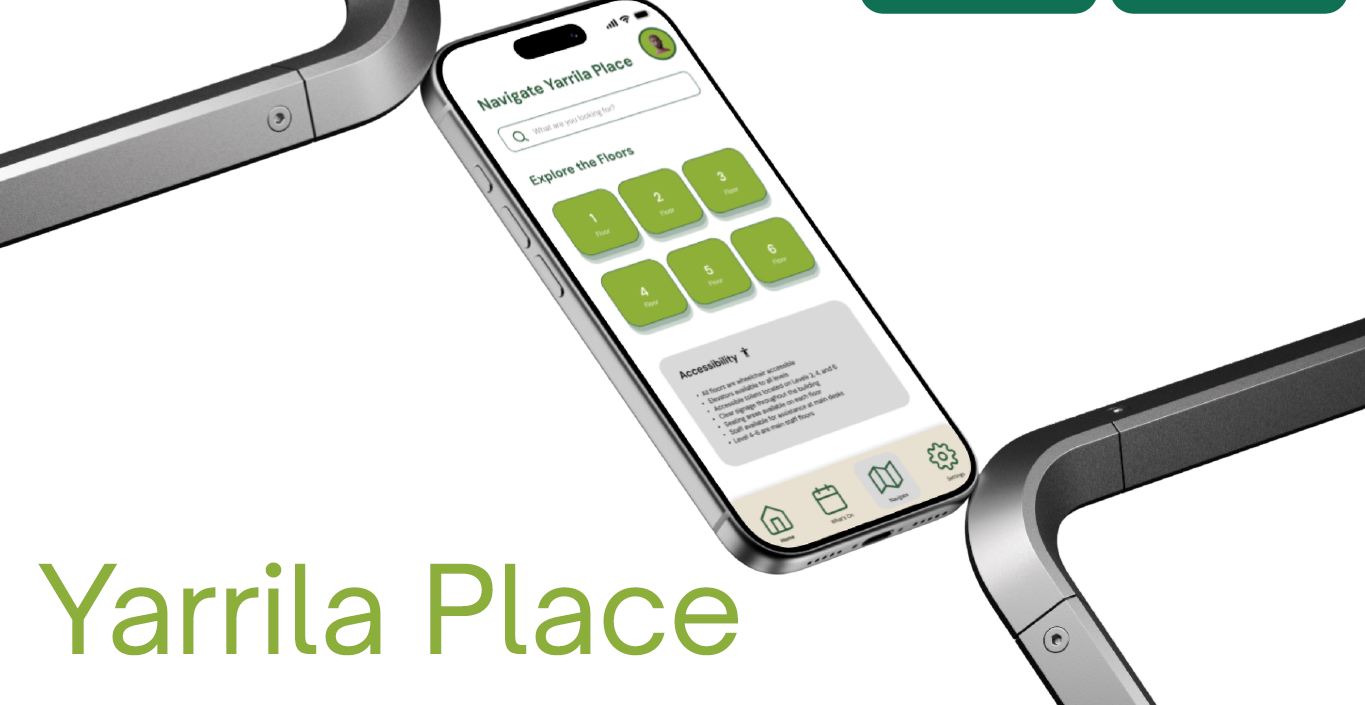
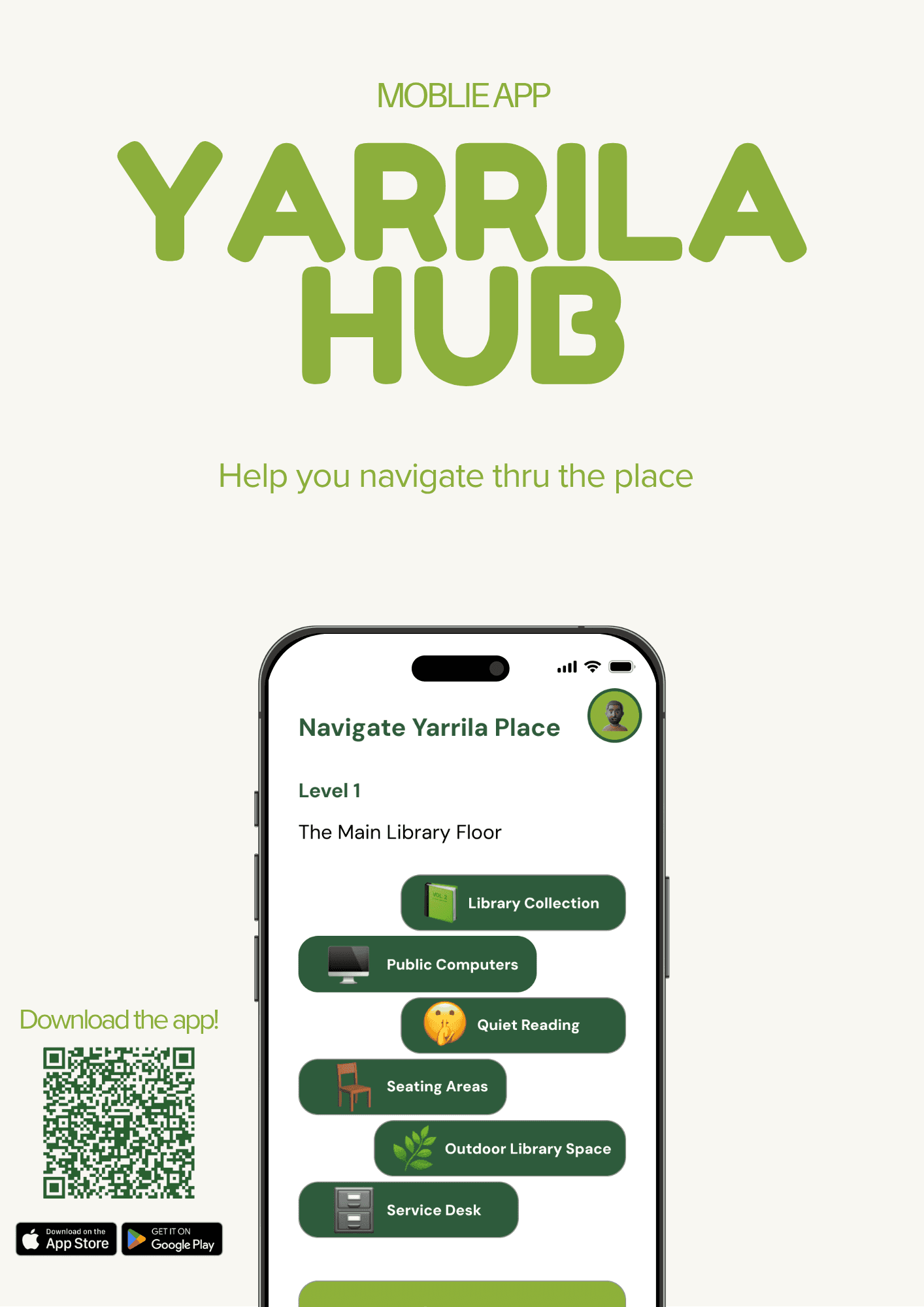
The final concept is a mobile app that centralises navigation, events, and cultural storytelling for Yarrila Place.
The final concept is a mobile app that centralises navigation, events, and cultural storytelling for Yarrila Place.
Overall, the project transforms Yarrila Place from a physically complex environment into a more accessible, understandable, and engaging digital experience that supports community participation.
Overall, the project transforms Yarrila Place from a physically complex environment into a more accessible, understandable, and engaging digital experience that supports community participation.
Final Outcome
Research focused on understanding how users interact with complex public and cultural spaces, and how digital tools can improve wayfinding and engagement.
Research focused on understanding how users interact with complex public and cultural spaces, and how digital tools can improve wayfinding and engagement.
This included:
analysis of existing community and cultural hubs
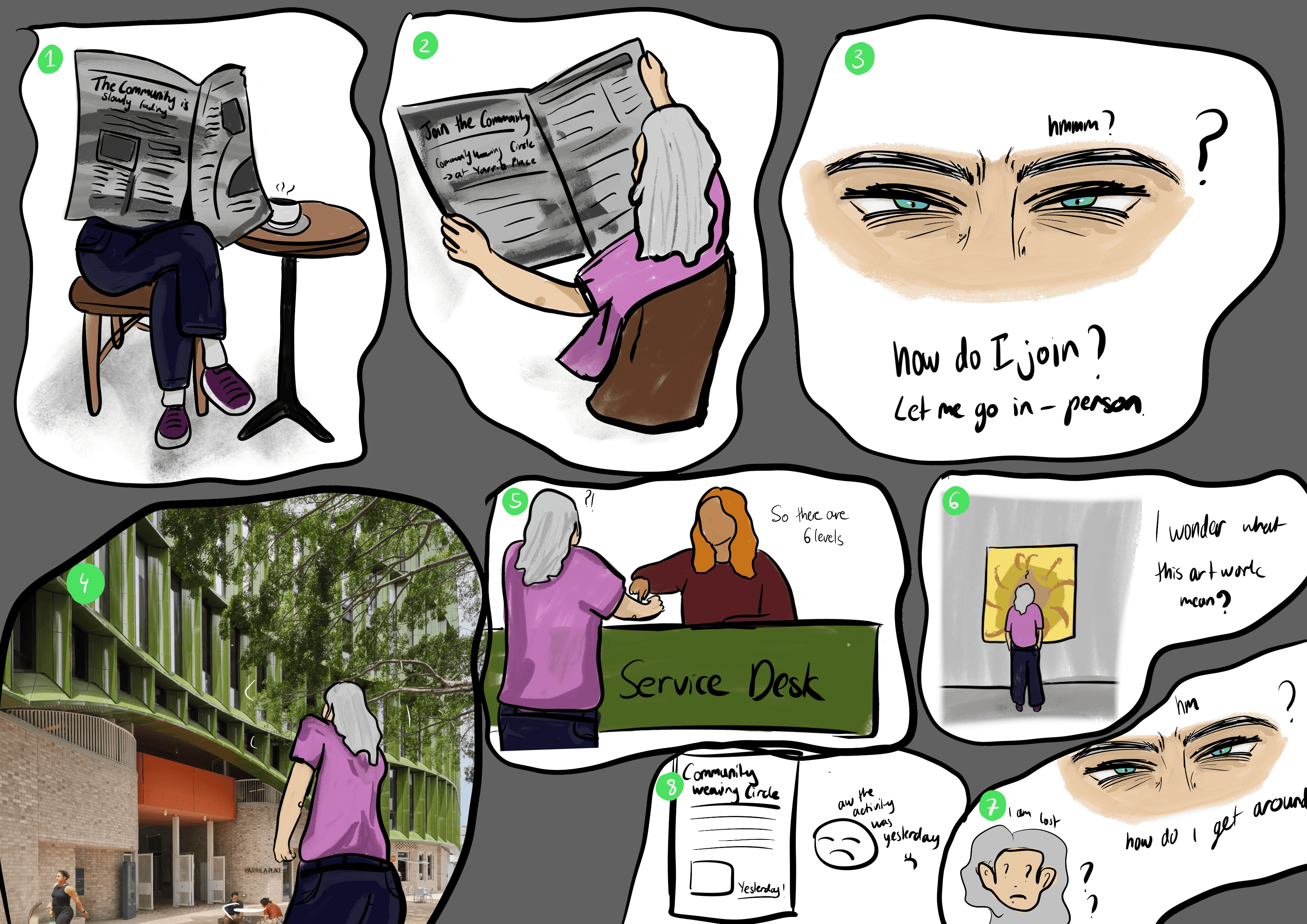
user journey mapping for first-time visitors
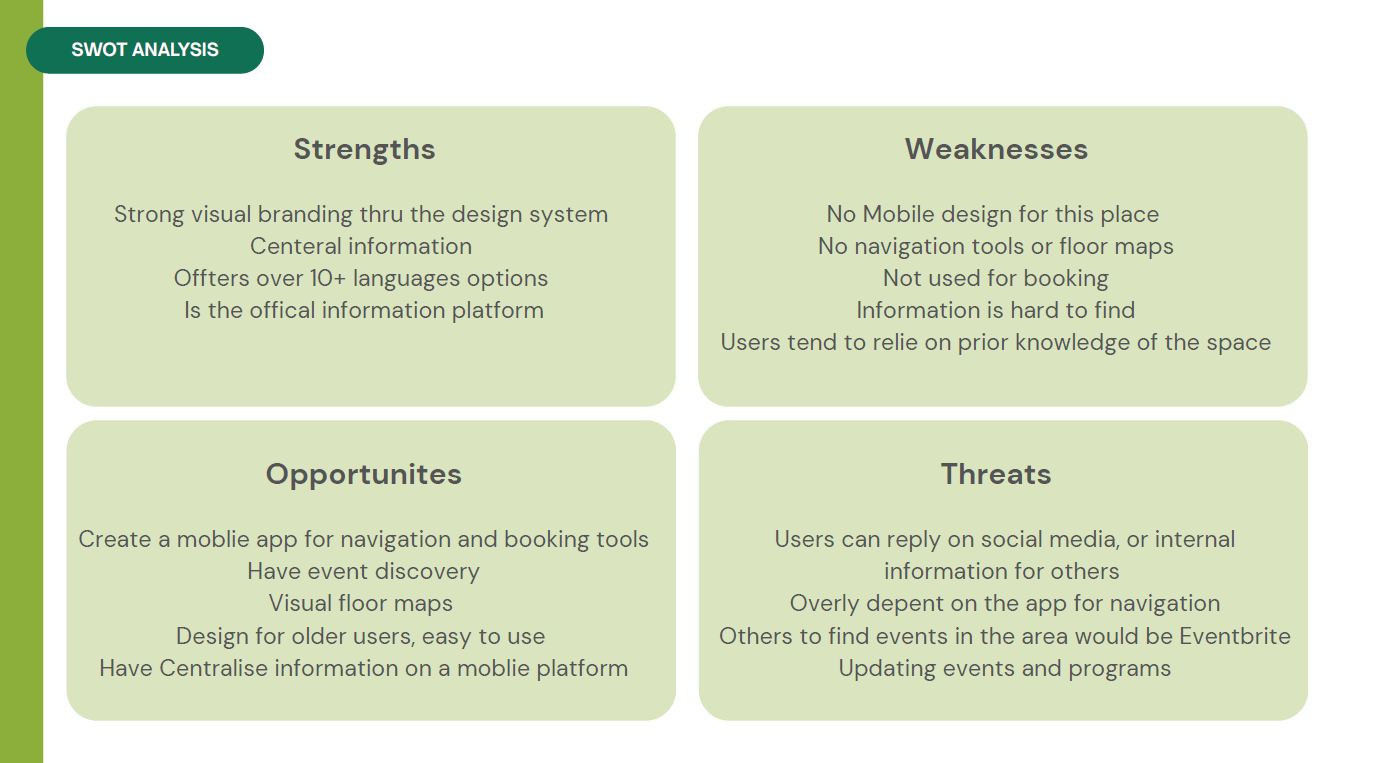
SWOT analysis of current information systems
competitor research (e.g. Google Maps, Eventbrite, Meetup)
identifying pain points in navigation and event discovery
Key insights showed that users needed:
clearer structure and information hierarchy
simplified navigation systems
stronger visual cues for decision-making
reduced cognitive load when exploring unfamiliar spaces
This included:
analysis of existing community and cultural hubs
user journey mapping for first-time visitors
SWOT analysis of current information systems
competitor research (e.g. Google Maps, Eventbrite, Meetup)
identifying pain points in navigation and event discovery
Key insights showed that users needed:
clearer structure and information hierarchy
simplified navigation systems
stronger visual cues for decision-making
reduced cognitive load when exploring unfamiliar spaces
Research