Australia faces a significant e-waste issue, generating approximately 26kg of e-waste per person annually, including headphones, phones, and other electronic devices. A large proportion of this waste is not properly recycled, contributing to environmental harm.
Australia faces a significant e-waste issue, generating approximately 26kg of e-waste per person annually, including headphones, phones, and other electronic devices. A large proportion of this waste is not properly recycled, contributing to environmental harm.
frequent breakage
lack of repairability
rapid product replacement cycles
limited recycling options due to embedded electronics and batteries
frequent breakage
lack of repairability
rapid product replacement cycles
limited recycling options due to embedded electronics and batteries
Problem
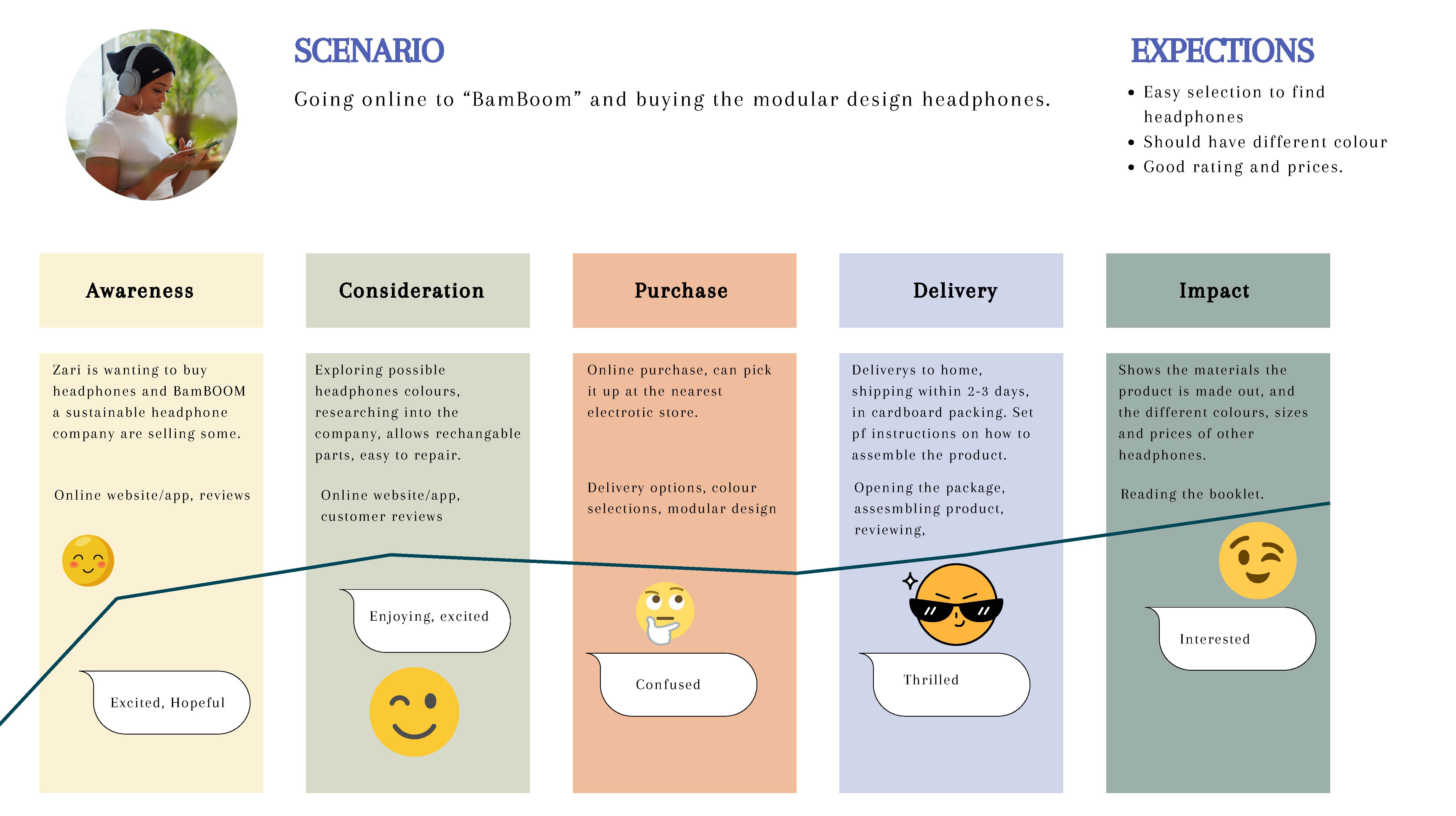
The design of BAMBOOM was guided by sustainability, modularity, and user experience.
The design of BAMBOOM was guided by sustainability, modularity, and user experience.
avoiding toxic glues and permanent adhesives in favour of mechanical attachments
selecting bamboo as the main structural material due to its strength and sustainability
using mycelium for soft components such as ear cuffs for comfort and biodegradability
designing components for disassembly, recycling, and reuse
allowing customisation through interchangeable parts and colour options
ensuring the headphones maintain performance comparable to conventional designs
avoiding toxic glues and permanent adhesives in favour of mechanical attachments
selecting bamboo as the main structural material due to its strength and sustainability
using mycelium for soft components such as ear cuffs for comfort and biodegradability
designing components for disassembly, recycling, and reuse
allowing customisation through interchangeable parts and colour options
ensuring the headphones maintain performance comparable to conventional designs
Design Decisions
bamboom
bamboom
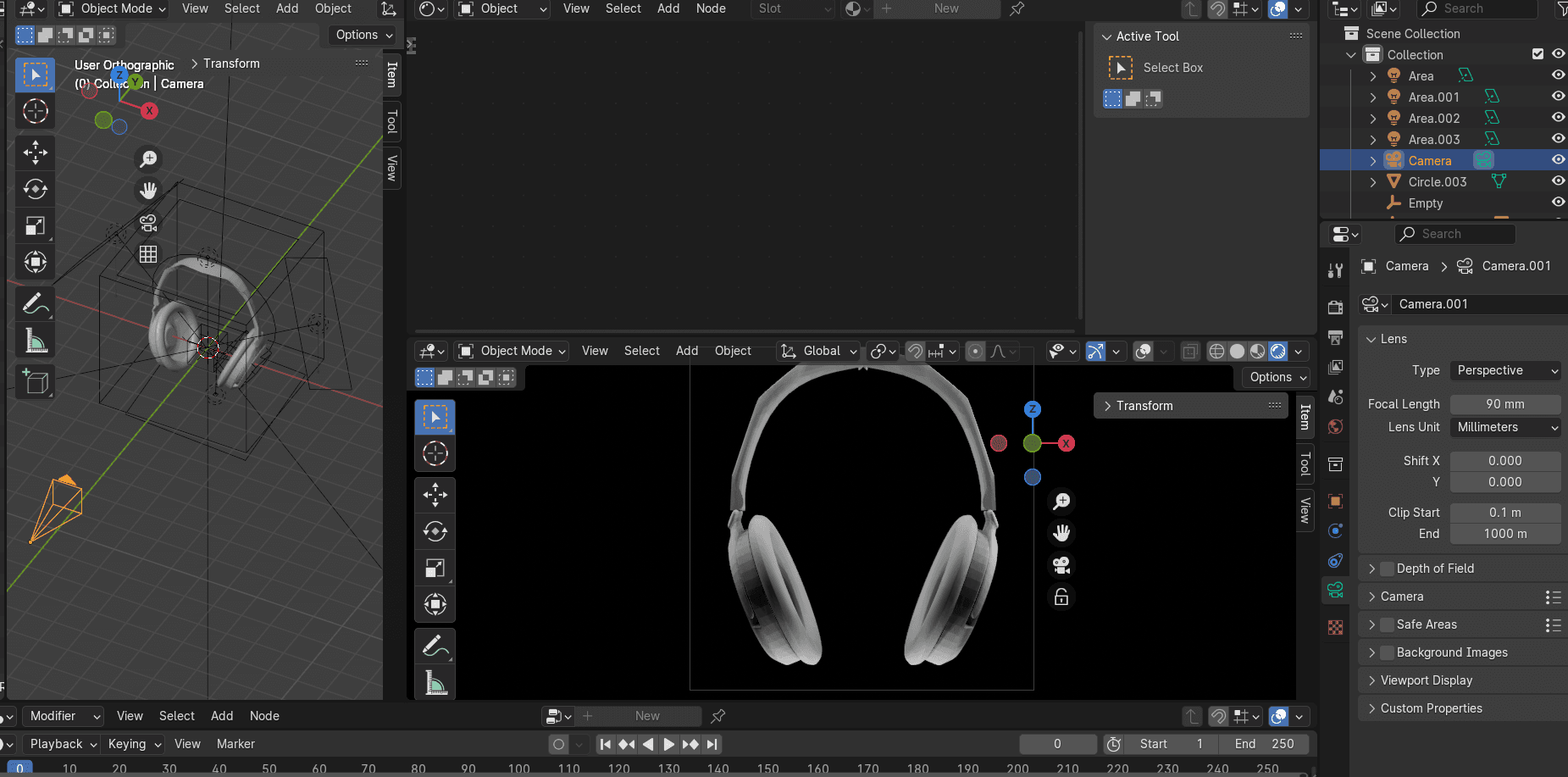
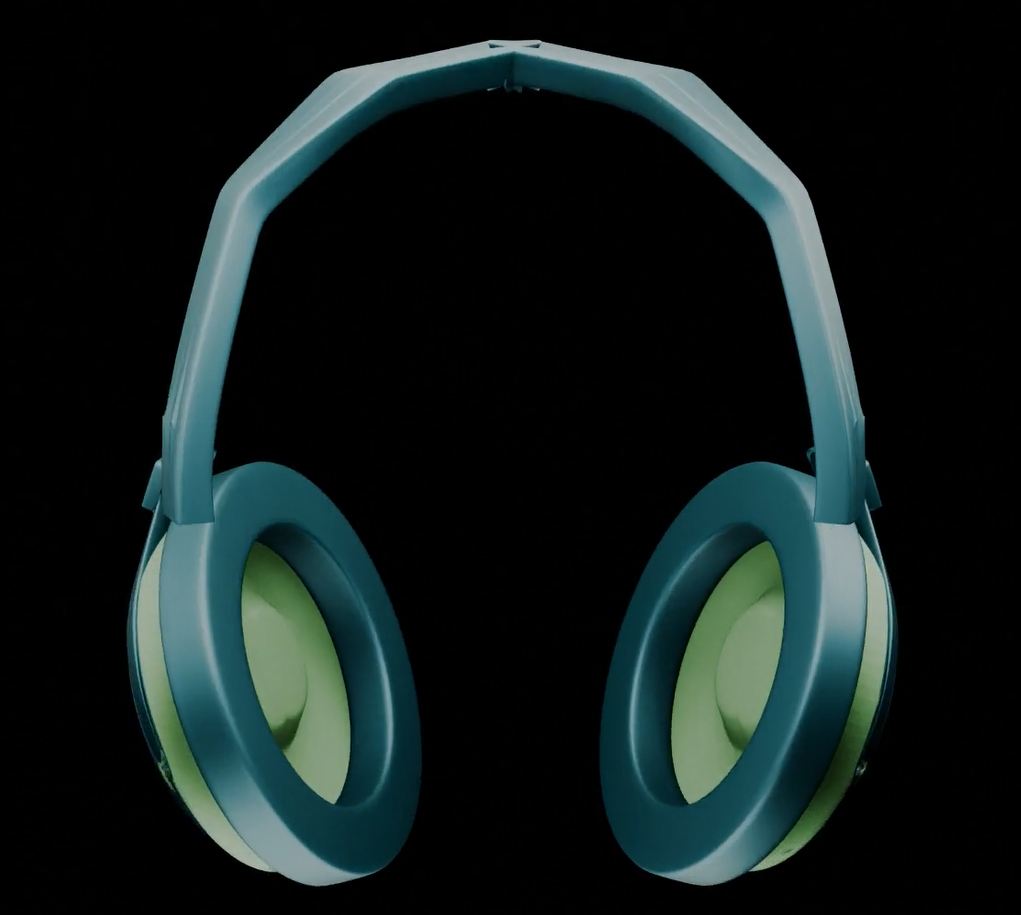
BAMBOOM is a conceptual product design project exploring how circular design principles can be applied to consumer electronics. The project focuses on designing a modular pair of headphones made from sustainable materials such as bamboo and mycelium. The aim is to rethink how headphones are manufactured, used, and disposed of by creating a product that is repairable, reusable, and biodegradable, while still maintaining high sound quality and usability.
BAMBOOM is a conceptual product design project exploring how circular design principles can be applied to consumer electronics. The project focuses on designing a modular pair of headphones made from sustainable materials such as bamboo and mycelium. The aim is to rethink how headphones are manufactured, used, and disposed of by creating a product that is repairable, reusable, and biodegradable, while still maintaining high sound quality and usability.
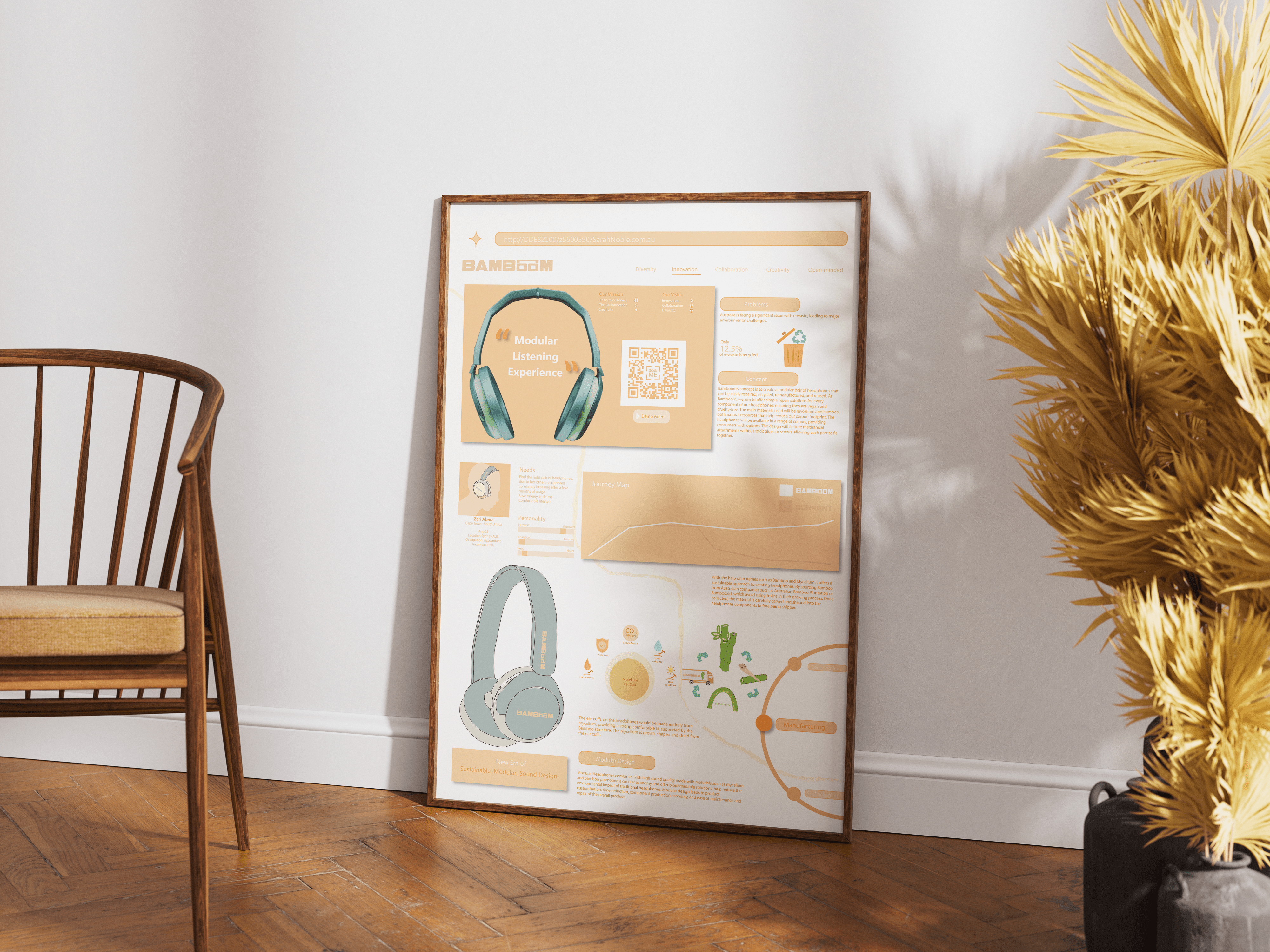
The final concept is a modular, sustainable headphone system designed to reduce e-waste and extend product lifespan.
The final concept is a modular, sustainable headphone system designed to reduce e-waste and extend product lifespan.
Rather than treating headphones as disposable products, BAMBOOM reframes them as long-term, adaptable systems that evolve with the user.
Rather than treating headphones as disposable products, BAMBOOM reframes them as long-term, adaptable systems that evolve with the user.
Final Outcome
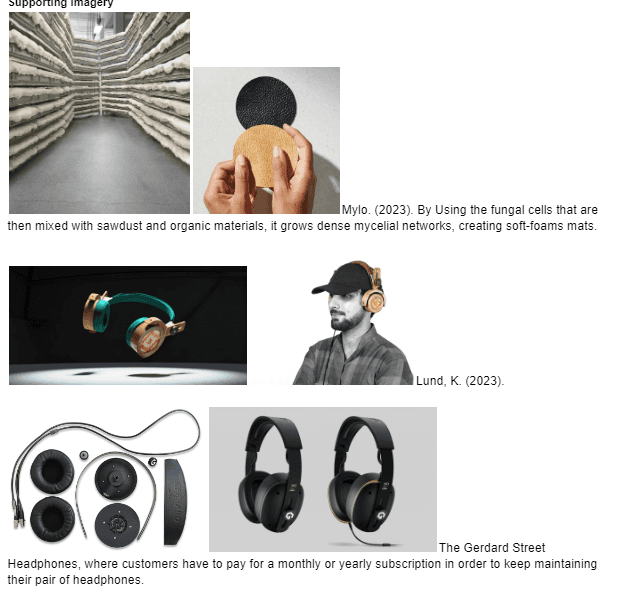
Research focused on e-waste, circular economy principles, modular design systems, and sustainable materials.
Research focused on e-waste, circular economy principles, modular design systems, and sustainable materials.
Key areas included:
Australia’s growing e-waste statistics and recycling limitations
consumer behaviour around short product lifespans
modular design theory and product lifecycle systems
sustainable material alternatives such as bamboo and mycelium
existing headphone and audio product design standards
Insights showed that modularity improves:
repairability
product lifespan
component reuse
reduction of manufacturing waste
Key areas included:
Australia’s growing e-waste statistics and recycling limitations
consumer behaviour around short product lifespans
modular design theory and product lifecycle systems
sustainable material alternatives such as bamboo and mycelium
existing headphone and audio product design standards
Insights showed that modularity improves:
repairability
product lifespan
component reuse
reduction of manufacturing waste
Key areas included:
Australia’s growing e-waste statistics and recycling limitations
consumer behaviour around short product lifespans
modular design theory and product lifecycle systems
sustainable material alternatives such as bamboo and mycelium
existing headphone and audio product design standards
Insights showed that modularity improves:
repairability
product lifespan
component reuse
reduction of manufacturing waste
Research